
Fraud Prevention Playbook: Strategies To Spot, Prevent, and Respond to Scams
It isn’t always easy to spot a scam. But one of the easiest fraud prevention strategies is: if something seems suspicious, do not provide information, send money, or grant access to your device. It’s really that simple.
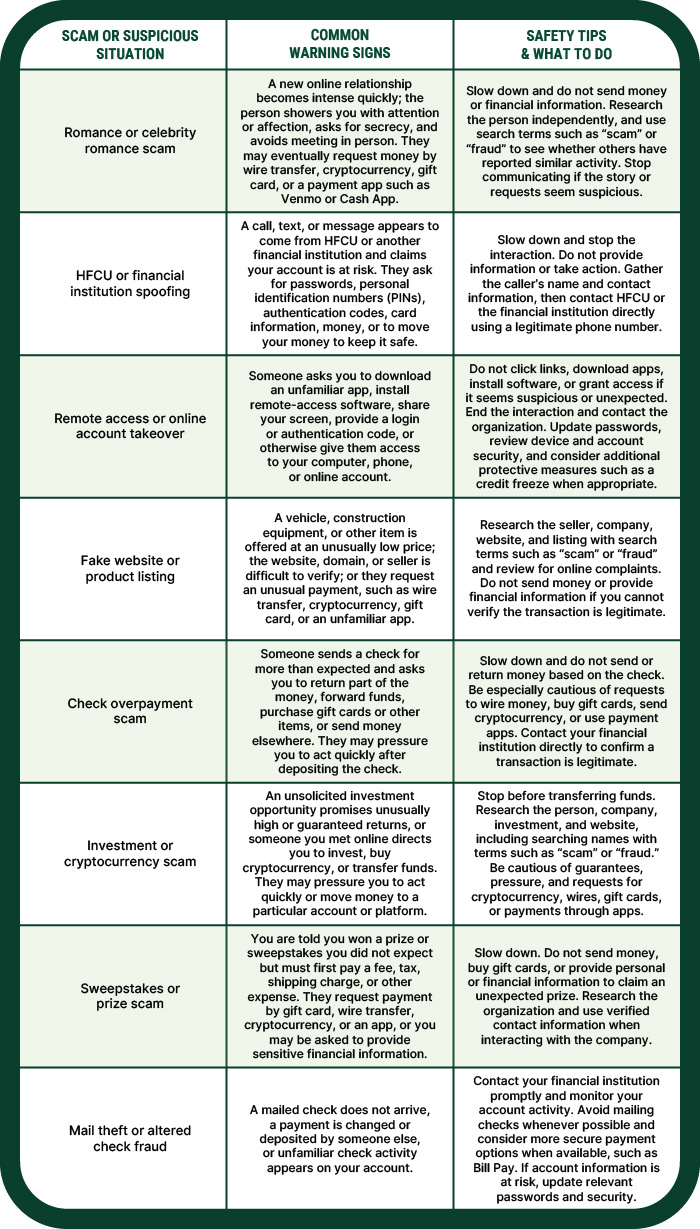
Is It a Scam? Warning Signs and What to Do
Scammers may contact people by phone, text, email, social media, websites, or other channels while impersonating trusted organizations, government agencies, businesses, or people they know. It is always important to take the time to verify that requests are coming from a legitimate source.
Common signs you are being scammed include unexpected requests for money, gift cards, or sensitive information. Scammers also may pressure you to act quickly, or communicate in ways that just do not seem quite right, such as requesting access to take over control of your screen. When in doubt, end the interaction immediately and verify the request using a trusted phone number or website. You also can contact your financial institution, like Heritage Family Credit Union, for guidance
Scams, Warning Signs, and Safety Tips
Protect Your Financial Information and Accounts
Some of the most effective ways to prevent fraud include using strong, unique passwords for each account and enabling two-factor authentication. You can also help protect your financial information, accounts, and devices by incorporating a few ongoing security habits into how you manage your finances and respond to unexpected requests.
- Never share sensitive account or login information, authentication codes, or access to your devices because of an unsolicited request.
- Do not download unfamiliar apps or remote-access software at someone else’s request, especially if they contacted you unexpectedly.
- Set account and card alerts to help you stay aware of activity.
- Review your account activity regularly for unauthorized transactions.
- Use card controls to monitor card use and deactivate a card when appropriate.
- Keep your devices, operating systems, and security software updated.
- Confirm the legitimacy of unexpected communications by using independently verified contact information, not the phone number or link provided in the message.
- Consider safer alternatives to mailing checks when possible, since checks contain personal and banking information that could be exposed if lost or stolen.
- Create a family code word or phrase that loved ones can use to verify their identity if you receive an unexpected or urgent request for money.
- Use IDProtect®, included with Premier Checking, for identity and credit file monitoring, credit report access, and support from a fraud specialist if identity fraud occurs.
Think You’ve Been Scammed? Take These Steps
If you think you may be a victim of financial fraud, stay calm and act promptly to limit further exposure. Do not be embarrassed to contact your financial institution. Being open about what happened can help them understand the situation and determine what steps may be appropriate to protect your accounts.
- Stop communicating with the suspected scammer. Do not send more money, share additional information, or respond to further requests.
- Contact your financial institution immediately. Explain what happened and what account, card, payment, or login information may have been affected.
- Ask about steps to protect affected accounts and transactions. Depending on the situation, these may include stopping eligible payments, disputing unauthorized debit or credit card transactions, completing an Affidavit of Forgery, or changing an account number.
- Secure your accounts. Update affected passwords and login credentials, remove access previously granted to the suspected scammer, and use card controls or report a lost or stolen card when necessary.
- Secure your devices. Remove apps or remote-access software you were instructed to download and have affected devices professionally checked for malicious software.
- Review and monitor your accounts. Look for unauthorized transactions and continue monitoring account activity regularly for additional suspicious activity.
- Save relevant documentation. Keep texts, emails, receipts, screenshots, and other information related to the suspected fraud.
- Report the fraud to the appropriate authorities or agencies. Depending on what happened, this may include law enforcement or an affected government, mail, or delivery agency.
- Follow your financial institution’s fraud guidance. Additional steps may be necessary depending on the type of fraud, information exposed, and transactions involved.
- Be patient with the recovery process. Recovering funds is not always possible, and investigations, disputes, and other recovery efforts may take time.
Contact HFCU About Suspected Fraud
HFCU will never ask members for their PIN, passwords, login information, authentication codes, or debit or credit card number. If a suspicious call appears to come from HFCU, hang up and contact us directly.
- HFCU Call Center: 888-252-8932
- eBranch: Members can also use secure messaging for appropriate account questions.