
Supporting Children and Aging Parents: A Practical Guide to Sandwich Generation Financial Planning
Many adults today find themselves caring for two generations at once: raising children while also helping aging parents. This life stage, often called the sandwich generation, brings both emotional rewards and financial complexity.
Sandwich generation financial planning involves balancing daily household needs, long-term savings goals, and the unexpected costs of caregiving. When multiple generations depend on the same financial foundation, planning ahead can make a meaningful difference in maintaining stability and peace of mind for the entire family. Understanding the challenges of the sandwich generation and developing a practical approach to manage multiple responsibilities can help families move forward with greater confidence.
Financial Realities of the Sandwich Generation
Adults in the sandwich generation may be supporting children’s daily needs and education while also helping aging parents navigate healthcare, housing, or long-term care decisions. These overlapping challenges can make it harder to balance everyday expenses with long-term goals such as retirement savings. With several priorities competing for the same resources, it takes a clear plan to stay organized and maintain stability.
The Growing Need for Multigenerational Financial Planning
Rather than focusing on a single stage of life, multigenerational financial planning looks at how decisions today affect children, parents, and future family members. By viewing finances through a broader family lens, households can make more informed decisions that support current obligations while still preparing for future needs.
Common Financial Priorities When Supporting Children and Aging Parents
Duties often overlap and change over time when caring for both children and aging parents. The chart below highlights how different priorities can fit within financial planning for the sandwich generation.
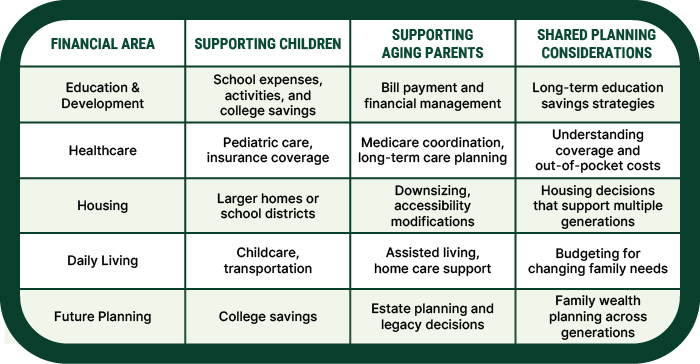
While these responsibilities may look different across generations, they often compete for the same household resources. A coordinated approach can help families prepare for these needs while still keeping goals in view.
Practical Strategies for Managing Multiple Financial Responsibilities
One of the biggest challenges during this stage in life is learning how to manage family finances with multiple accounts while supporting multiple generations. Coordinating checking, savings, retirement, and even higher-yield options such as money market accounts can become complicated when each account serves a different purpose.
Keeping these accounts organized and aligned with household priorities can make day-to-day decisions easier and help families stay on track.
Steps that support effective sandwich generation financial planning can help families create structure, reduce uncertainty, and make thoughtful decisions when several people depend on the same resources.
- Create clear financial priorities. Identifying immediate needs, mid-term priorities, and long-term plans can help families allocate resources. Many households find that creating a clear monthly budget is one of the most effective ways to stay organized as obligations change.
- Coordinate accounts and financial responsibilities. Learning how to manage family finances with multiple accounts can simplify budgeting when supporting several family members. Using a reliable everyday account for routine expenses can also make it easier to track spending.
- Set financial goals tied to life milestones. Major life events often shape family priorities. Setting clear goals around milestones such as college enrollment, welcoming a new child, retirement transitions, or healthcare needs allows families to prepare gradually as responsibilities change.
- Maintain progress toward retirement savings. Supporting parents while raising children can make it tempting to pause retirement contributions, but continuing to set money aside whenever possible helps protect long-term stability while caregiving responsibilities evolve.
- Communicate openly with family members. Clear conversations about expectations and responsibilities can prevent misunderstandings and help families make decisions together.
These strategies can help families manage the many challenges of the sandwich generation while keeping long-term stability in focus. For individuals balancing care for children and aging parents, financial planning is also a form of self-care. Creating structure around accounts, goals, and family conversations can reduce uncertainty, support healthier boundaries, and make it easier to protect personal savings, retirement progress, and peace of mind as responsibilities change over time. With a thoughtful plan in place, caregivers may feel more supported, less alone in their decisions, and better prepared to care for themselves while continuing to care for the people who depend on them.
How Family Wealth Planning Supports Long-Term Stability
Planning is not only about managing today’s expenses but also about preparing for future generations. For families supporting both children and aging parents, taking a long-term view can help ensure resources support the entire household over time.
Family wealth planning plays an important role for the sandwich generation, helping them to:
- Coordinate retirement savings and caregiving costs
- Prepare for inheritance and estate planning discussions
- Share financial knowledge across generations
- Create a flexible plan that adapts as family needs change over time
Caring for both children and aging parents can be one of life’s most meaningful roles, but it also brings an array of financial decisions that must be considered. With the right approach to sandwich generation financial planning, families can take steps that support loved ones today while keeping goals within reach.
If you are navigating responsibilities across generations, contact the team at Heritage Family Credit Union to help you explore options and discover solutions that best fit your financial picture.