
The Homebuying Process: From Start to Finish
The homebuying process involves several financial and practical stages, from preparing your finances and getting pre-approved for a mortgage to making an offer, completing property reviews, and closing on your new home.
This guide explains the process from start to finish, including when to begin, how to prepare, and what to expect along the way.
When Should You Start the Homebuying Process?
Start preparing before you’re ready to make an offer, especially if you need time to review your credit, reduce debt, build savings, or gather documents. There’s no single timeline that works for everyone, but starting early can help you identify affordability concerns before you become attached to a home.
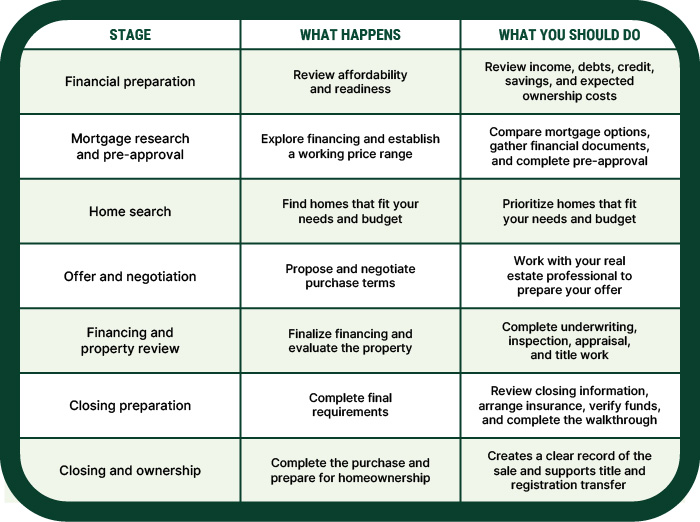
Homebuying Stages at a Glance
This overview shows what to expect at each stage of the homebuying process.
Step 1: Review Your Finances and Set a Homebuying Budget
The homebuying process should start with your full financial picture, not the price of a home you find online. Consider:
- Income, employment, monthly debts, and recurring expenses
- Credit reports and credit scores
- Savings for a down payment, closing costs, and emergencies
- Moving, initial repair, and maintenance expenses
- Property taxes, homeowners' insurance, association fees, and other ongoing ownership costs
You don’t necessarily need a 20% down payment. Available mortgage and assistance programs vary, so talk with an HFCU mortgage specialist about the options that may best fit your financial picture.
Estimate a Comfortable Monthly Housing Payment
The amount you qualify to borrow may be higher than the amount that comfortably supports your budget and longer-term goals. A mortgage calculator or home affordability calculator can help you account for ongoing housing costs, compare price ranges, and estimate potential effects on your monthly budget.
Step 2: Explore Mortgage Options and Get Pre-Approved
Mortgage options vary in their structure, requirements, and long-term costs. Options may include fixed-rate, adjustable-rate, first-time homebuyer, and down-payment-assistance programs. A mortgage specialist can help you compare available options and determine which financial records you'll need. Gathering requested documents early can make it easier to respond as the process moves forward.
Mortgage pre-approval can help establish a realistic price range and show sellers that you’ve prepared for financing. Unlike pre-qualification, which is generally an early estimate based largely on information you provide, pre-approval involves a more detailed financial review.
Pre-approval doesn’t guarantee final loan approval, a specific rate, or a successful closing. Your comfortable budget, rather than your maximum pre-approved amount, should continue to guide your search.
Step 3: Choose Your Priorities and Begin the Home Search
Use your budget and pre-approval to focus on homes that fit your finances, needs, and longer-term plans. Compare factors such as:
- Location and must-have features
- Taxes, association fees, and other ownership costs
- Property condition and potential renovation or maintenance needs
During showings, look beyond finishes and staging for signs of the home's overall condition. Your observations can help you compare pro perties, but they don't replace a professional inspection.
Step 4: Make an Offer
Your offer lays out the proposed terms of the purchase. Depending on the transaction, it may address:
- Purchase price
- Financing
- Inspection and appraisal provisions
- Closing date
- Seller contributions and other contingencies
Because the purchase agreement affects your finances, timeline, and responsibilities, work with qualified real estate and legal professionals who can help you understand the terms before you sign.
Step 5: Complete the Mortgage Application and Underwriting Process
After the seller accepts your offer, you’ll complete or update your formal mortgage application. During underwriting, the lender will:
- Review your financial and property information
- Verify supporting documents
- Evaluate the application under the selected loan program
Continue responding promptly to requests and keep your financial situation as consistent as possible. Before taking on new debt, opening a credit line, making a large purchase, changing jobs, or moving a significant amount of money, ask your lender whether the change could affect your application.
Step 6: Complete the Inspection, Appraisal, and Title Work
After your offer is accepted, several property-related reviews may begin:
- Home inspection: Helps identify concerns about the property's condition.
- Appraisal or valuation: Helps the lender assess the property's value.
- Title work: Helps confirm ownership and identify issues that may need to be resolved before closing.
Additional reviews or documentation may be required depending on the property, loan program, and local requirements.
Step 7: Prepare for Closing
As closing approaches, review your closing information, arrange homeowners' insurance, confirm the funds you'll need, and complete your final walkthrough.
Before sending closing funds, verify all wire or payment instructions through a trusted phone number or contact method. Be cautious if instructions arrive by email or change unexpectedly.
Step 8: Close on the Home and Plan for the First Months of Ownership
Closing generally includes signing documents, completing required payments, transferring ownership, and receiving access to the property.
Once you're settled, confirm your mortgage payment process, store important documents, and plan for maintenance and other new expenses. Rebuilding savings can also help prepare your household for unexpected costs as your needs change over time.
How Long Does the Homebuying Process Take?
There’s no universal homebuying timeline. Financial preparation and the home search may take weeks, months, or longer. After an offer is accepted, the process becomes more structured, but timing still depends on the financing, property, and transaction.
Missing documents, financial changes, property concerns, or closing issues can cause delays. Staying organized, responding promptly, and keeping in contact with the professionals involved can help the process move forward.
Homebuying Checklist: Your Next Steps
Before you begin your home search, make sure you've:
- Reviewed your budget and savings
- Gathered key financial documents
- Explored mortgage options and pre-approval
- Identified your homebuying priorities
Talk With an HFCU Mortgage Specialist
You don’t have to sort through every mortgage decision alone. HFCU’s local Vermont mortgage team can help you explore available mortgage programs, understand document requirements, and prepare for upcoming steps.
Speak with a mortgage specialist to start the conversation or begin an application when you’re ready.